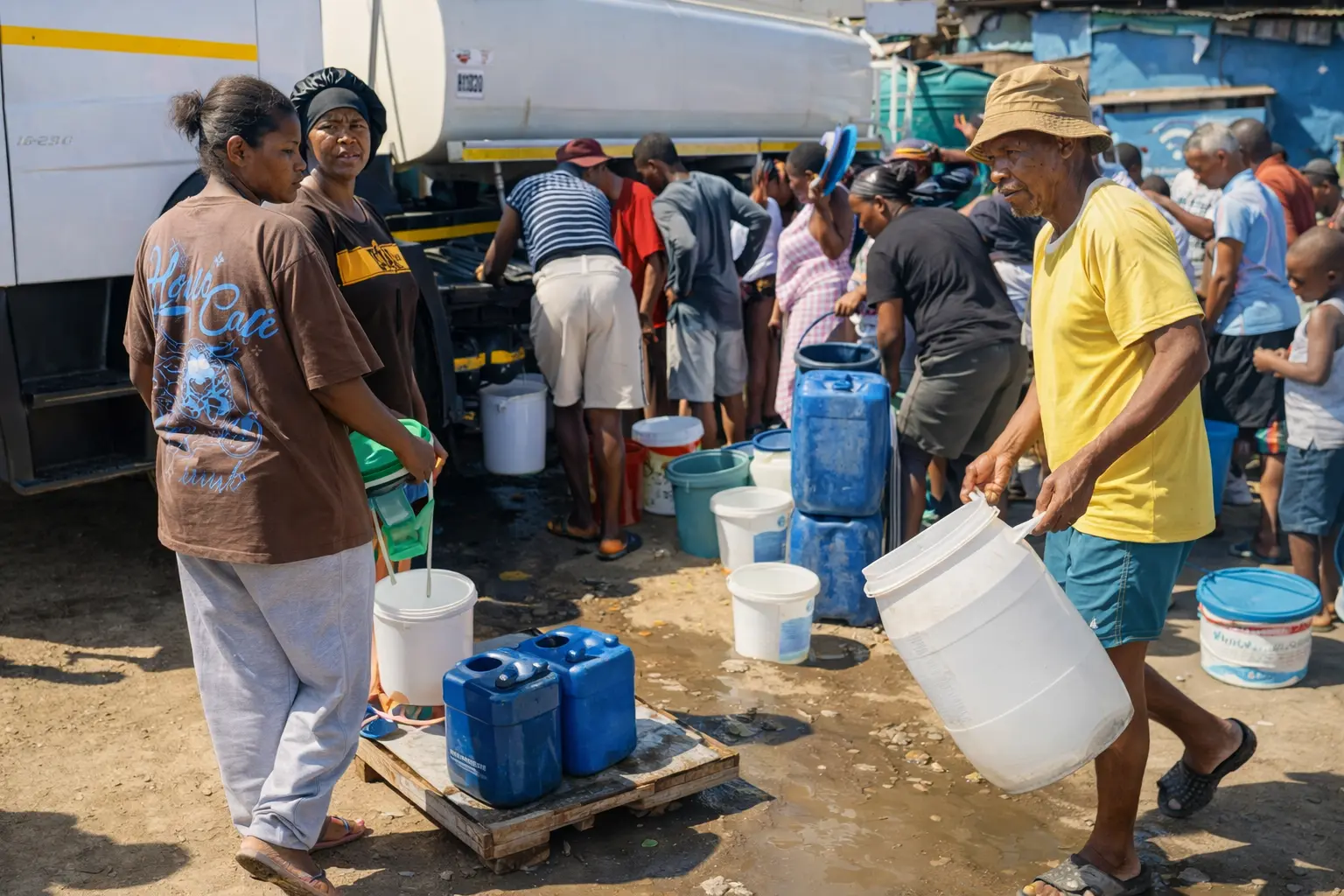
Johannesburg Water Crisis: Taps Run Dry in Africa's Richest City
Johannesburg, often celebrated as the vibrant "City of Gold" and the indisputable economic engine of South Africa, is currently grappling with a severe and escalating challenge: its taps are running dry. This alarming water crisis has left countless residents across Africa’s richest city struggling, sparking widespread frustration and raising critical questions about urban planning, infrastructure resilience, and governance. While the immediate focus is on the lack of water, this predicament is but one facet of the broader johannesburg city woes that threaten to undermine its status and the quality of life for its millions of inhabitants.
The Dry Reality: A City Thirsty for Solutions
The severity of Johannesburg's water shortage cannot be overstated. For weeks, and in some areas months, residents have endured intermittent or complete cuts to their water supply, turning a basic necessity into a luxury. The city, which epitomizes modern African ambition, now faces scenes more commonly associated with rural scarcity: long queues for water tankers, frantic searches for bottled water, and the arduous task of managing daily life without a reliable supply. Beyond the personal hardship, businesses, particularly in hospitality and manufacturing, are feeling the profound economic impact, with operations hampered and costs soaring.
The situation reached a boiling point when a senior politician's suggestion for affected residents to "shower in hotels" unleashed a torrent of public fury, highlighting the disconnect between leadership and the lived realities on the ground. This tone-deaf remark underscored the deep-seated anger and desperation felt by those bearing the brunt of the crisis.
Several factors are contributing to this dire situation:
- Aging Infrastructure: Much of Johannesburg's water network consists of pipes laid decades ago, prone to frequent bursts and leaks. It's estimated that a significant percentage of treated water is lost before it even reaches consumers due to this dilapidated infrastructure.
- Rapid Urbanization and Population Growth: The magnetic pull of Johannesburg as an economic hub has led to massive population growth, placing immense strain on existing water resources and supply systems. Demand has simply outstripped the capacity of the current infrastructure.
- Climate Change Impacts: While not the sole cause, shifting weather patterns, including more frequent and prolonged droughts, coupled with erratic rainfall, put additional pressure on the region's primary water sources, notably the Vaal Dam system.
- Maintenance and Management Lapses: Critics point to years of underinvestment in maintenance, delayed upgrades, and potential inefficiencies in the management of Joburg Water and its bulk supplier, Rand Water.
Practical Tips for Residents Amidst the Crisis:
- Conserve Every Drop: Implement extreme water-saving measures, from shorter showers to collecting greywater for gardening or flushing toilets.
- Report Leaks Immediately: Be vigilant and report any visible pipe bursts or significant leaks to Joburg Water. Every drop saved from a leak is water for someone's tap.
- Store Water Responsibly: Keep emergency supplies of potable water in clean containers, but avoid hoarding, which can exacerbate shortages.
- Stay Informed: Monitor official communications from Joburg Water and local authorities for updates on outages and water tanker locations.
Beyond the Water Woes: Johannesburg's Broader Infrastructure Challenges
While water scarcity dominates headlines, it is crucial to recognize that this crisis is not isolated. It runs parallel to other significant johannesburg city woes, particularly its notorious traffic congestion. Both issues illustrate a common theme: an economic powerhouse struggling to keep pace with its own explosive growth and the demands placed upon its foundational systems.
Johannesburg's daily gridlock mirrors the water crisis in its impact on productivity and quality of life. The city boasts over 9,000 km of roads, yet simply expanding them is no longer a viable solution due to limited space and spiraling costs. The TomTom Traffic Index 2024 reports an average travel speed of just 32 km/h, with congestion causing 32% of all travel delays. This means commuters spend significantly more time stuck in traffic than actually moving, directly increasing logistics costs for businesses and reducing overall urban productivity.
The challenge is compounded by the fact that the majority of Johannesburg households do not own private cars, meaning road widening primarily benefits a minority, while public transport demand is projected to double by 2040. This highlights a clear need for a paradigm shift from car-centric planning to integrated, multi-modal transport solutions. For a deeper dive into these strategies, explore Beyond Asphalt: Smart Transport to Solve Johannesburg's Congestion.
The interconnectedness of these challenges is undeniable. Both the water crisis and traffic congestion are symptoms of a rapidly expanding city whose infrastructure and planning have not kept pace. They represent significant threats to Johannesburg's continued prosperity and the well-being of its residents, creating what can be described as Johannesburg's Dual Crises: Traffic & Water Threaten Economic Hub.
Navigating the Future: Strategies for Urban Resilience
Addressing Johannesburg's intertwined johannesburg city woes requires a comprehensive, long-term vision coupled with decisive, immediate action. It demands a shift from reactive problem-solving to proactive, integrated urban planning that prioritizes sustainability and citizen well-being.
For Water Security:
- Aggressive Infrastructure Upgrades: A massive, sustained investment is needed to replace decaying pipes, upgrade pumping stations, and implement smart technologies for leak detection and repair. Reducing water losses from leaks is a quick win.
- Demand-Side Management: Beyond individual conservation, this involves implementing smart metering systems, enforcing water restrictions during periods of scarcity, and educating the public on sustainable water use.
- Diversification of Water Sources: While not a coastal city, Johannesburg could explore expanding groundwater abstraction in suitable areas and, critically, investing in advanced wastewater treatment for reuse in industrial applications or even potable reuse, significantly reducing reliance on distant bulk suppliers.
- Strengthened Governance and Maintenance: Improved transparency, accountability, and professional management within water utilities are paramount, ensuring regular maintenance schedules are adhered to and emergencies are handled efficiently.
- Climate Change Adaptation: Developing robust strategies to manage increased drought frequency and higher temperatures, potentially through enhanced stormwater harvesting and recharge initiatives.
For Transport Efficiency:
The solution lies not in more asphalt, but in smarter transport planning that moves people, not just cars:
- Expand and Integrate Public Transport: Leverage and significantly expand existing systems like the Gautrain and Rea Vaya BRT. This means increasing coverage to more neighborhoods, boosting frequency during peak hours, and ensuring reliability and safety to build commuter trust.
- Improve First- and Last-Mile Connectivity: Implement feeder bus services that connect residential areas to main public transport arteries. Simultaneously, invest heavily in safe, well-maintained walking paths and dedicated cycling lanes to encourage active transport for short distances.
- Land Use Integration: Future urban planning must integrate transport decisions with land use. By creating mixed-use developments that combine residential, commercial, and recreational spaces, daily travel distances can be significantly reduced.
- Encourage Modal Shift: Implement policies that disincentivize single-occupancy vehicle use. This could include congestion pricing in specific zones, stricter parking limits, and the creation of car-free zones in certain city areas.
- Smart City Technologies: Utilize technology for real-time traffic management, intelligent signalization, and dynamic public transport information to optimize flow and inform commuters.
Conclusion
Johannesburg's current water crisis serves as a stark reminder that even Africa's richest city is vulnerable to foundational infrastructure failures when proactive planning and consistent investment lag behind rapid growth. This critical issue, alongside persistent traffic congestion, paints a clear picture of the interconnected johannesburg city woes. Overcoming these challenges will require more than just short-term fixes; it demands visionary leadership, robust infrastructure investment, integrated urban planning, and the active participation of its citizens. Only through a holistic and sustained effort can Johannesburg truly build the resilient, efficient, and equitable future its status as an economic powerhouse deserves, ensuring that the taps flow and its people move freely for generations to come.